Hearing aids could benefit an estimated 28.8 million U.S. adults.[1] There are many benefits to wearing the devices, ranging from clearer conversations to increased background awareness. Although hearing aids offer those benefits and more, many people hesitate to get them, often because of misconceptions around the devices.
Let’s look at four common hearing aid misconceptions to help you feel confident scheduling your hearing aid appointment.
Misconception #1: Hearing Aids Aren’t Necessary for Mild Hearing Loss
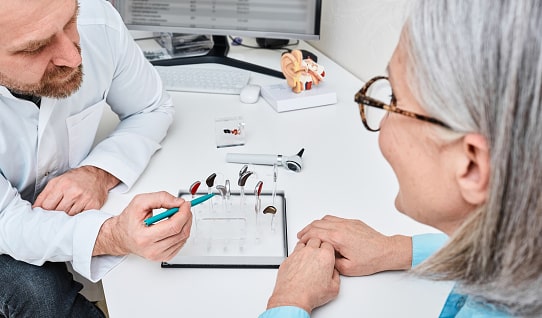
The term “mild” describes a decibel (dB) loss of 26 to 40. People with mild hearing loss may struggle to hear young children and other high-pitched sounds, soft-spoken people and certain consonants. While a mild hearing loss diagnosis may not seem like a big deal at first, it can have a big impact on how well you communicate with the world.
Using hearing aids for mild hearing loss means that you won’t have to strain to hear in every conversation.
Misconception # 2: Hearing Aids Aren’t Helpful for Profound Hearing Loss
Just as people think you don’t need hearing aids for mild loss, others think you don’t need them for profound hearing loss, also classified as deafness. Hearing aids may not be able to make speech clear for people with profound hearing loss, but they can improve awareness of louder sounds like honking cars, fire alarms and safety sirens.
Misconception #3: Hearing Aids Are Clunky
The idea that hearing aids are clunky is a pervasive one. You might be picturing huge ear trumpets from the distant past or even the slightly-too-big devices from twenty years ago. The good news is that hearing aids have evolved in the same fashion as other tech; they’re smaller, sleeker and cooler than ever before.
Misconception #4: Hearing Aids Are Uncomfortable
Just as with headphones, wearing your hearing aids for a whole day might initially cause discomfort. You’ll likely notice your devices a lot in the first few days. But, luckily, hearing aids are designed to be comfortable; within a few days or weeks, you’ll hardly notice them at all.
If you’re ready to start hearing more clearly, contact Arizona Hearing Specialists today to schedule a consultation with one of our specialists.
[1] National Institute on Deafness and Other Communication Disorders. (2024). Quick statistics about hearing, balance, & dizziness. National Institutes of Health. https://www.nidcd.nih.gov/health/statistics/quick-statistics-hearing