Your ear has three parts—the outer, middle and inner—and each part is responsible for a different part of the hearing process. When one part of that process stops functioning effectively, you’ll have a harder time hearing. One common reason for permanent hearing loss lies in the inner ear.
The Part of Your Ear You Never See
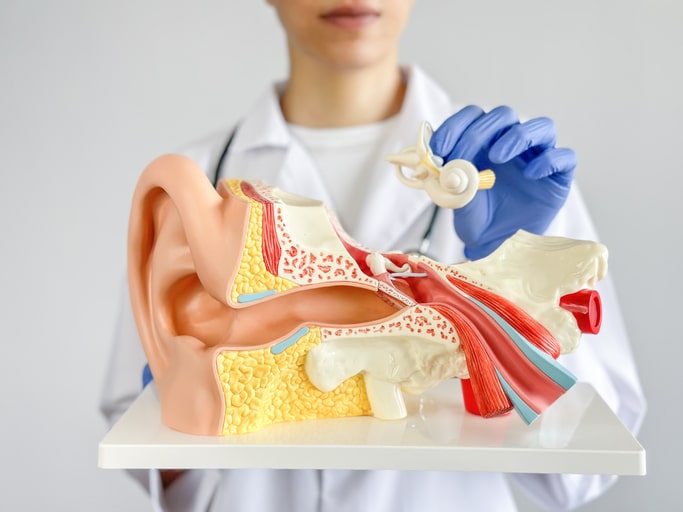
The inner ear contains the cochlea, a small, snail-shaped structure lined with thousands of sensory hair cells. These cells respond to sound vibrations and send signals to the brain, allowing you to recognize speech and everyday sounds.
When those cells are damaged, the signals become weaker or distorted. As a result, voices may seem unclear or disappear altogether.
Why Damage Happens
Inner ear hearing loss can develop for many reasons:
- Aging
- Repeated exposure to loud noise
- Certain medications
- Certain medical conditions
- Genetics
Sometimes several factors work together over many years. That’s why hearing loss often appears gradually rather than all at once.
The Signs Many People Miss
Not everyone notices hearing loss right away. In fact, family members often spot it first.
You might find yourself:
- Increasing the television volume
- Struggling in crowded restaurants
- Asking people to repeat themselves
- Having difficulty with high-pitched sounds
- Feeling like others are mumbling
- Feeling excessively tired after conversations
Since high-pitched noises are often the first to go, you may notice that children or the birds in Joaquin Murrieta Northwest Park are the most obvious missing sounds.
Addressing Hearing Loss
While damaged sensory hair cells generally do not regenerate, many people successfully manage hearing loss after identifying the cause and severity. The first step is understanding exactly what type of hearing change you’re experiencing. Hearing loss isn’t always caused by the inner ear. Problems in other parts of the hearing system can create similar symptoms.
A comprehensive hearing evaluation at Arizona Hearing Specialists can help determine what’s affecting your hearing and provide a clearer understanding of what comes next. In many cases, we’ll recommend hearing aids to address inner ear damage.
Sources
Kuhn, M., Heman-Ackah, S. E., Shaikh, J. A., & Roehm, P. C. (2011). Sudden sensorineural hearing loss: a review of diagnosis, treatment, and prognosis. Trends in amplification, 15(3), 91–105. https://doi.org/10.1177/1084713811408349